Monday, May 2, 2011

Spring Comes to Belleplain

Quick post on Week 5 in Belleplain. . . and a question to ponder: Is April the new May?

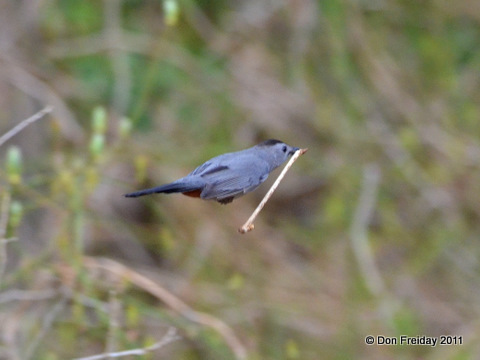
 [Summer Tanager was in in Belleplain Sunday, or at least this one was, the lone SUTA I saw or heard. Frank's Road, singing away. A Scarlet Tanager sang nearby as well.]

[Spicebush Swallowtail and Flowering Dogwood. Gotta fly, more thoughts and photos later this week.]

Location: Belleplain State Forest
Observation date: 5/1/11
Notes: 7:00 a.m.-10:30 a.m. 13.5 miles. mostly clear, temp 46 to 60 degrees, light wind. Gray Treefrog calling (2), roadkill green snake. Spicebush Swallowtail, Horace's Duskywing.
Number of species: 58

Canada Goose 4
Wild Turkey 1
Black Vulture 4
Turkey Vulture 2
Broad-winged Hawk 1 calling repeatedly and circling cedar bridge road
Red-tailed Hawk 1
Killdeer 2
Laughing Gull 50
Herring Gull 10
Mourning Dove 3
Ruby-throated Hummingbird 2 low spot cedar bridge
Red-bellied Woodpecker 3
Downy Woodpecker 1
Hairy Woodpecker 1 drumming Tom Field Road
Northern Flicker 2
Acadian Flycatcher 6Eastern Phoebe 2
Great Crested Flycatcher 15
Eastern Kingbird 1
White-eyed Vireo 10
Blue-headed Vireo 1
Red-eyed Vireo 20
Blue Jay 2
Fish Crow 1
Carolina Chickadee 10
Tufted Titmouse 25
Red-breasted Nuthatch 1
Blue-gray Gnatcatcher 35
Wood Thrush 29 clicked, but singing mostly shut down after 8:00 a.m.
American Robin 6
Gray Catbird 6
Brown Thrasher 2
Blue-winged Warbler 1
Northern Parula 1
Yellow Warbler 1
Yellow-rumped Warbler (Myrtle) 10
Black-throated Green Warbler 2Yellow-throated Warbler 12
Pine Warbler 30
Prairie Warbler 5
Black-and-white Warbler 24 clicked
American Redstart 2 Sunset Bridge
Prothonotary Warbler 1 Sunset Bridge
Worm-eating Warbler 22 clicked
Ovenbird 93 clicked
Northern Waterthrush 1
Louisiana Waterthrush 3
New birds?
Common Yellowthroat 2
Hooded Warbler 6Eastern Towhee 10
Chipping Sparrow 10
Summer Tanager 1 Frank's Road
Scarlet Tanager 6Northern Cardinal 5
Common Grackle 5
Brown-headed Cowbird 20
Orchard Oriole 1
American Goldfinch 10

Wednesday, April 27, 2011

Wordless Wednesday

[scroll down]


[Edwin B. Forsythe NWR, April 27, 2011, 7:42 a.m.]

Sunday, April 24, 2011

Looking Up: Belleplain Weekend 4

[Most oaks in south Jersey began to flower this week; this newly arrived Scarlet Tanager found insects in the clusters. Belleplain State Forest today. Click to enlarge all photos.]

Warm, calm, clear. Oak flowers bursting, Shadbush and Dogwood flowering, and even more birds singing than I had expected - and I had expected a lot!

[Worm-eating Warbler belts out his song.  Today was the first time I really appreciated how many Worm-eating Warblers inhabit  Belleplain's southern forest habitat - I carefully estimated 22, and suspect even more will be arriving in the coming weeks.]

FOY, FOY, FOY - I knew it was going to be good when a Green Heron flew over as I started my route, and then shortly after an Orchard Oriole and Wood Thrush became FOY's - first-of-year - for me. I believe 14 species were new to Belleplain since last weekend, and FOY's for me.

[Maybe this is the Hooded Warbler we found wintering in Hopkins, Belize in March, now back on his Mountain Laurel-studded territory in Belleplain along Narrows Road. He was one of three today.]

I decided to click Ovenbird, Pine Warbler, and Blue-gray Gnatcatcher today, and came up with 74, 33 and 43 respectively.  Last week's low Pine Warbler count was certainly due to the less-good weather and later start. It is interesting to compare numbers since I started this Belleplain thing, both number of species and number of birds:

April 3  -  32 species, 227 individuals
April 10 - 38 species, 352 individuals
April 17 - 39 species, 307 individuals (cool, windy weather, late start)
April 24 - 55 species, 596 individuals

Obviously a major jump in species and indivduals since last week, with the arrival of many neotropical migrants.
[Shadbush blooming along Pine Swamp Road.]


[Big old tom Wild Turkey along Sunset Road. This guy was all colored up, thanks to the hens he was following and trying to impress. Turkeys flood their head with blood when they display, heightening the colors. This was part of the reason Ben Franklin argued for them as the national bird - complete with red, white and blue head!]
[Lovely, lovely Flowering Dogwood at the entrance to Lake Nummy campground.]

Here's the full list from this morning, with more interesting species or counts bolded:
Location: Belleplain State Forest
Observation date: 4/24/11
Notes: Perfect morning. 7-10:30, 15.4 miles. clear, 60's-70's
Number of species: 55

Wood Duck 1
American Black Duck 1
Wild Turkey 10
Green Heron 1 flyover
Black Vulture 1
Turkey Vulture 1
Cooper's Hawk 1
American Kestrel 1 sumner road
Laughing Gull 25
Herring Gull 5
Great Black-backed Gull 1
Mourning Dove 8
Red-bellied Woodpecker 6
Downy Woodpecker 8
Northern Flicker 4
Acadian Flycatcher 1
Eastern Phoebe 6
Great Crested Flycatcher 8
Eastern Kingbird 4
White-eyed Vireo 10

Blue-headed Vireo 8
Red-eyed Vireo 2

Blue Jay 15
Fish Crow 5
Carolina Chickadee 10
Tufted Titmouse 16
White-breasted Nuthatch 1
Carolina Wren 2
Blue-gray Gnatcatcher 43 clicked
Ruby-crowned Kinglet 2
Wood Thrush 15
American Robin 20
Gray Catbird 3
Brown Thrasher 8
Blue-winged Warbler 1
Northern Parula 2

Yellow-rumped Warbler 15
Black-throated Green Warbler 1
Yellow-throated Warbler 8
Pine Warbler 33 clicked
Prairie Warbler 6
Black-and-white Warbler 45 careful estimate
Prothonotary Warbler 2
Worm-eating Warbler 22 careful estimate
Ovenbird 74 clicked
Louisiana Waterthrush 1
Hooded Warbler 2

Eastern Towhee 15
Chipping Sparrow 20
White-throated Sparrow 22
Scarlet Tanager 3
Northern Cardinal 20
Brown-headed Cowbird 30
Orchard Oriole 1
American Goldfinch 20

Saturday, April 23, 2011

Answer to Wordless Wednesday

What do Tufted Titmice and Slaty-tailed Trogons have in common? They are both "secondary cavity nesters," i.e. they nest in cavities made by woodpeckers or otherwise naturally created, e.g. when a branch breaks and leaves a hole. Both can also excavate cavities in punky material. The agitated titmouse pair pictured below were photographed in Belleplain last weekend, the trogon was in Mayflower - Bocavina National Park in Belize on March 17, 2011.

You could learn about titmouse nesting habits and a whole lot more in
The Birder's Handbook: A Field Guide to the Natural History of North American Birds, one of what I consider the most essential bird references around. I've been reading up on trogons and other species seen on my March trip to Belize, and have been longing for a similar handy reference for that country.

One thing that the trogons do that titmice do not is nest in termitaries - perhaps if there were termitaries (termite nests) in titmouse range, they would use them? One of these days I'll get around to doing a post on the four Belize trogon species. Among the insights from that trip is that while I can identify birds okay, way too often I don't know a damn thing about them. E.g., did you know trogons have serrated tomia (the cutting edege of the bill)? I looked at the photo below, of a Slaty-tailed Trogon panting, and thought, what the hek is that all about? Maybe for eating tough fruit or excavating cavities?

A Great-crested Flycatcher wheep!'d delightfully in the yard when I got home from work last night, my FOY. Tomorrow will be the weekly expedition to Belleplain, perhaps more GCFL await, with maybe Hooded Warbler in the understory?